

On this page Open
- The short answer
- 1. What is VALORANT?
- 2. VALORANT age rating
- 3. Can younger children play?
- 4. Is VALORANT safe for kids?
- 5. Voice chat and stranger contact
- 6. Parental controls
- 7. In-game spending
- 8. Competitive pressure and playtime
- 9. Warning signs
- 10. Benefits of VALORANT
- 11. VALORANT in schools
- Parent checklist
- How Squid Academy Supports
- FAQs
VALORANT is one of the most popular competitive shooters in the world, and plenty of parents first hear about it when a child asks to download it because friends are already playing.
The difficult part is that there is no single global answer to the question, “What age is VALORANT for?”
In PEGI territories, VALORANT is rated PEGI 16 for strong violence. In North America, the ESRB rates it T for Teen, meaning content is generally suitable for ages 13 and up.
Riot Games also applies account and parental-consent rules that vary by region.
So the useful parent question is not simply, “Can my child technically open the game?”
It is whether your child is ready for the game content, online communication, competitive pressure and spending systems that come with it.
Use your local age rating as the baseline, then separately consider voice chat, stranger contact, spending, play habits and your child’s maturity.
The short answer
VALORANT's official age rating depends on where you live.
PEGI territories
PEGI 16
North America
ESRB Teen 13+
Those ratings are only the starting point. Voice chat, who your child plays with, spending and how they handle competitive pressure matter just as much.
1. What is VALORANT?
VALORANT is a free-to-play tactical shooter made by Riot Games, the studio behind League of Legends. Two teams of five take turns attacking and defending, and each round is won by planting or defusing a device called the Spike, or by eliminating the other team.
Every player picks an Agent, a character with a small set of special abilities. Accurate aim matters, but most rounds are decided by communication, positioning and teamwork. That is a large part of why the game is popular with teenagers, and also why voice chat plays such a central role.
VALORANT is played on PC and on PlayStation 5 and Xbox Series X|S. It has one of the largest professional esports scenes in the world, so many young players also watch it on Twitch and YouTube.
2. What age rating is VALORANT?
VALORANT is rated PEGI 16 in the UK and most of Europe, and Teen (13+) by the ESRB in the United States and Canada.
| Region / system | Rating | What parents should know |
|---|---|---|
| PEGI territories | PEGI 16 | Strong violence. Intended for players aged 16 and over. |
| North America / ESRB | Teen 13+ | Blood, Language and Violence, plus Users Interact and In-Game Purchases. |
There is no single global age for VALORANT because each rating board weighs content differently. PEGI tends to be stricter about realistic weapon violence, while the ESRB places the same game in its Teen band. Both boards are describing the same game. They are simply drawing the line in different places.
The ratings also only cover what is built into the game. They do not rate what other players say in voice chat, which is often the bigger question for parents. Riot's own Terms of Service make a similar point, encouraging parents to check their local rating system and supervise their child's online activity.
SourceESRB rating summary for VALORANT
Many older guides say VALORANT has no blood. According to the ESRB, characters emit spurts of blood when shot and collapse when killed. There is no gore or dismemberment, and players can reduce some effects in the settings, but the game is not blood-free.
3. Can younger children play VALORANT?
Riot's Terms of Service say that anyone who is not an adult needs valid parent or guardian consent to create an account and play. That consent is a permission, not a recommendation. Local account rules also differ, so it is worth checking the requirements for your region on Riot Support.
Here is how the ratings apply at each age.
-
Can a 10-year-old play VALORANT?
VALORANT is not designed for 10-year-olds.
A 10-year-old is six years below PEGI 16 and three years below ESRB Teen. The bigger issue is usually not the shooting but the open voice chat, which most children of this age find hard to manage.
-
Can an 11-year-old play VALORANT?
VALORANT is below the rated age for an 11-year-old everywhere.
Some parents still allow it, often because an older sibling plays. If you do, switch communication off or limit it to known friends, and stay close to the screen for the first few weeks.
-
Can a 12-year-old play VALORANT?
A 12-year-old is below both VALORANT ratings, so this is a parent's decision.
Twelve is a common age for children to start asking. If you say yes, it works best with chat restricted, a clear spending rule and a habit of talking about who they played with.
-
Can a 13-year-old play VALORANT?
It depends on where you live.
In North America, a 13-year-old meets the ESRB Teen rating. In PEGI territories such as the UK, the game is rated 16, so a 13-year-old is still three years under. Riot still requires parent consent for anyone who is not an adult, and the same questions about chat, strangers and spending apply either way.
4. Is VALORANT safe for kids?
VALORANT can be played safely by some young teenagers, but "safe" is not a single yes or no. It depends on the child, the settings and how involved the adults around them are.
It helps to break safety into five separate questions. Each one has its own risks and its own fixes.
A child might be fine with the violence but struggle with the chat. Another might handle chat well but find it hard to stop after a loss. Looking at each area separately makes it easier to decide what to allow and what to set up.
5. Voice chat, text chat and stranger contact
Most VALORANT matches involve talking to teammates, and unless your child only plays with friends, some of those teammates will be strangers.
Riot's rules ban harassment and abuse, and players can mute and report others. Even so, a child who plays regularly with open chat will probably meet some of the following at some point:
- swearing
- insults
- pressure after mistakes
- arguments
- offensive jokes
- unsolicited friend requests
- requests to move to another platform
The last two are the ones to take most seriously. A stranger who sends a friend request after a friendly match, then suggests moving to Discord, Snapchat or another app, is moving the conversation somewhere with fewer protections and less visibility.
Most unpleasant chat in VALORANT is ordinary bad temper rather than anything sinister. That still does not mean a child should have to sit through it.
The aim is not to eliminate every unpleasant interaction. It is to make sure your child knows how to leave one.
Five things worth agreeing before they play
- You can mute anyone, at any time, without explaining why.
- Never share your real name, school, location, photos or other accounts.
- Do not accept friend requests from people you have only met in a match.
- If someone asks you to move to another app, say no and tell me.
- You will not be in trouble for telling me something that felt wrong.
6. Does VALORANT have parental controls?
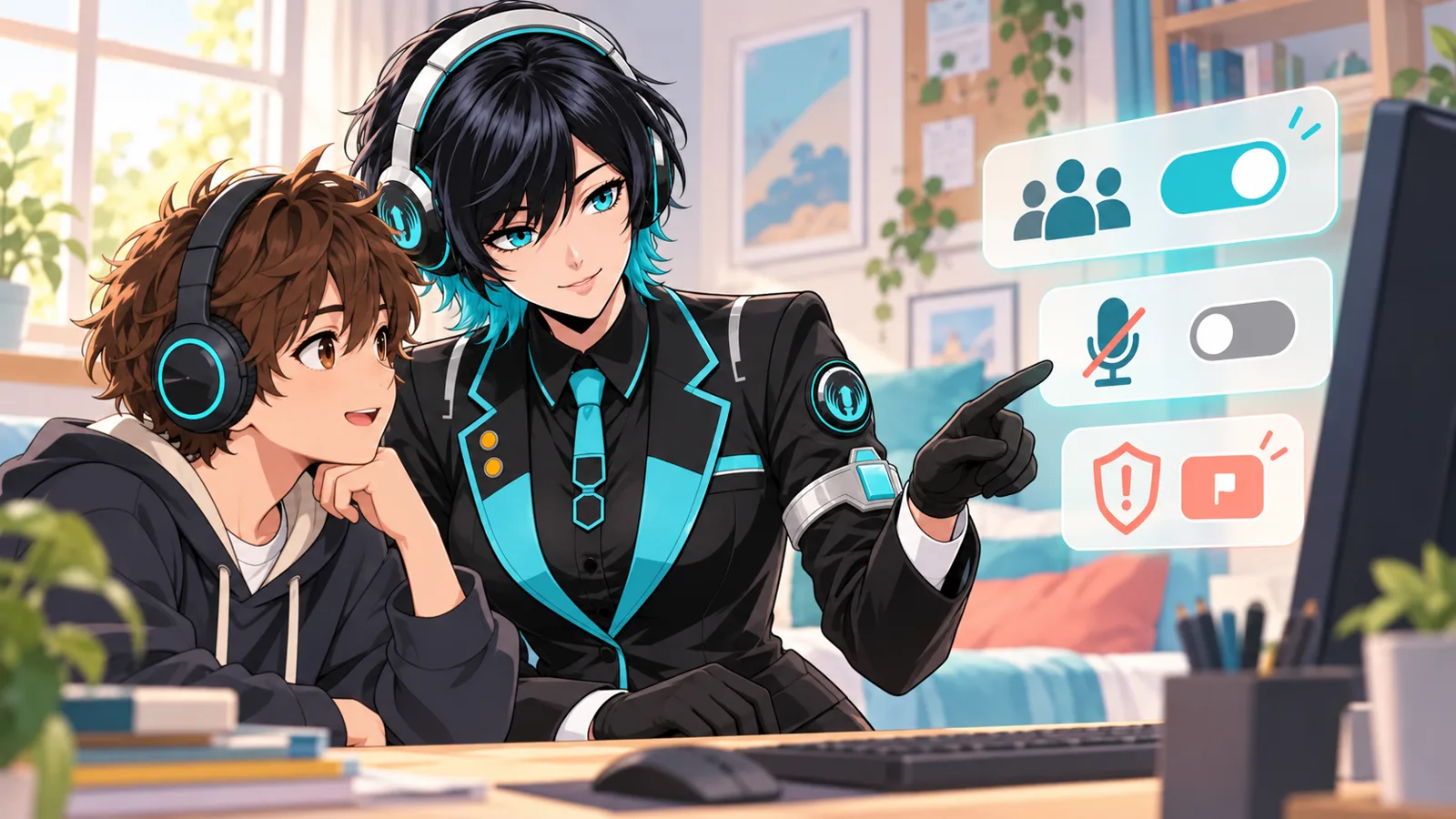
Yes, in some regions. In July 2026 Riot introduced optional parental controls in the United States for VALORANT, League of Legends and Teamfight Tactics on PC, managed through a new Parent Portal.
- Turn text chat off
- Turn voice chat off
- Limit communication to friends
- Prevent friend requests
- View friends list
- Restrict specific Riot games
- Disable account access
Summary of the features listed in Riot's parental controls announcement. This is not a screenshot of the Parent Portal.
To set it up, a parent logs into the child's Riot account, adds a parent email address under account management and follows the verification steps. Riot says that once a parent is verified, the child cannot remove the controls until they turn 18.
The portal does not show chat history or gameplay activity. Riot says that information can be requested through Player Support.
Outside the United States, availability varies. Riot has said it is working to bring similar features to more countries, but parents elsewhere should check what is currently offered in their region through Riot Support. In the meantime, the in-game settings and your console or operating system's own family controls still apply.
A sensible starting setup for younger teens
- Start with voice chat off, or limited to friends. You can open it up later once your child has shown they can handle it.
- Turn off or limit text chat in the same way, since abuse often moves to text when voice is muted.
- Stop friend requests from people they have not met in real life.
- Make sure they know where the mute and report options are, and practise using them together once.
- Agree a simple rule for what happens when a match turns nasty. Leaving an abusive conversation is more important than winning the match.
7. Does VALORANT cost money?
No. VALORANT is free to download and play. Money comes in through cosmetic items such as weapon skins, bought with an in-game currency called VALORANT Points.
Cosmetics do not change how strong a player is. For many teenagers, though, a skin is a way of showing identity and taste in front of friends, much like trainers or a phone case. Wanting one is normal. The useful question is how purchases happen in your house.
Under Riot's Terms of Service, a parent or guardian who allows a minor to create an account is responsible for purchases made on it. Refunds on digital items are limited, so it is easier to set expectations before the first request.

8. How does competitive pressure affect young players?
VALORANT is built around winning and losing. A match can take half an hour or more, and a loss is often shared with four other people who may not be kind about it.
Ranked mode adds a visible score that goes up and down with every result. For some teenagers that is motivating. For others it becomes a source of real frustration, especially late in the evening after a run of losses.
How do they talk about teammates after a bad game?
Can they stop after a loss, or do they need to play "one more" to fix it?
Those two questions tell you more than a total number of hours. A child who plays a lot but finishes calmly is often in a better place than one who plays less but ends every session angry.
How much time should a child spend playing VALORANT?
There is no single medical limit that applies to every child. The American Academy of Pediatrics encourages families to think about the quality of screen time and what it replaces, and suggests building a family media plan rather than relying on one number.
Protect these first
- Sleep
- School
- Exercise
- Meals
- Family
- Offline friends
- Other interests
Fit gaming around these, not the other way around.
Because a VALORANT match cannot be paused, stopping mid-game lets four teammates down and can lead to penalties. A "stop at 8:30" rule often ends in an argument at 8:29. A start-time rule works better.
A rule that tends to work
“You can start one more match before 8:30, but do not start another after that.”
The AAP's 5 Cs of media use are a useful starting point if you want to build a plan together with your child rather than for them.
9. What are signs gaming is becoming a problem?
Playing a lot is not the same as having a problem. The World Health Organization says gaming disorder affects only a small proportion of people who play video games.
What matters is the pattern. It is worth paying closer attention if you notice several of these over weeks rather than days:
- They find it very hard to stop, even when they have agreed to
- Gaming is pushing out sleep, homework, meals or exercise
- They have lost interest in hobbies and friends they used to enjoy
- They keep playing despite clear problems at school or at home
- Losses lead to anger or distress that lasts well after the match
- They become secretive about when they play or who they play with
If these signs are persistent and affecting daily life, talk to your child's school or GP. For most families, a calm conversation and a few changes to routine are the right first step.
10. Can VALORANT have positive benefits?
It can. Team games like VALORANT give young players a lot of practice in skills that matter well beyond gaming.
- Communication
- Decision-making
- Tactical planning
- Role understanding
- Teamwork
- Adapting after mistakes
- Managing pressure
The game does not automatically teach these skills.
Plenty of players spend hundreds of hours in VALORANT without getting better at communicating or handling setbacks. What changes that is reflection. Talking through what went wrong in a round, why a plan failed, or how a team spoke to each other is what turns gameplay into learning.
At home, that can be as simple as asking your child to explain a match to you. In schools, it is where structured teaching comes in.
11. Is VALORANT suitable for school esports?
It can be, with the right structure. Some schools and colleges already use VALORANT in their esports programmes, particularly with older students.
Whether it suits a particular school depends on:
- Local age rating
- School policy
- Safeguarding
- Account management
- Parent communication
- Supervision
For schools, the question changes slightly. It is no longer just whether students enjoy VALORANT, but whether the school can turn that interest into a supervised, purposeful learning environment.
That usually means school-managed accounts, chat restricted to teammates, clear behaviour expectations and a member of staff who is present during play. Our guide to starting a school esports programme covers those foundations in detail.
Squid Academy works with schools that want to go further. Modern Sport Pathways & Competition uses titles like VALORANT to teach teamwork, analysis and communication through structured lessons, and Mind Your Game supports structured gaming wellbeing alongside competition. For schools running matches, a school esports tournament platform can handle brackets, check-in and results.
Parent checklist before your child plays VALORANT
Most of this takes one evening to set up. It is worth revisiting every few months as your child gets older.
Age and account
- Check the local VALORANT rating
- Check Riot's regional account rules
- Use an accurate date of birth
- Complete parent approval where required
Communication
- Decide whether voice chat is needed
- Use friends-only communication where appropriate
- Review friend-request settings
- Show the child how to mute and report
- Agree what personal information must never be shared
Spending
- Decide whether purchases are allowed
- Set a budget if they are
- Avoid unrestricted payment methods for younger players
- Review purchases occasionally
Play habits
- Protect sleep
- Do not let gaming replace homework, exercise or family commitments
- Set a latest time to start a new match
- Watch behaviour after losses, not just total hours
Support
- Ask who they play with
- Know which other apps they use to communicate
- Keep gaming conversations normal
- Make it easy for them to tell you when something feels wrong
How Squid Academy Supports Families and Schools
Families can use this guide without using Squid Academy products.
For schools considering supervised VALORANT, our School Esports Starter Guide covers planning and safeguarding, Mind Your Game focuses on gaming wellbeing, and Modern Sport Pathways & Competition connects gameplay to structured learning.
Schools running matches can also use the Tournament Platform to manage brackets and results.
Frequently Asked Questions About VALORANT and Children
What age is VALORANT rated?
VALORANT is rated PEGI 16 in PEGI territories, including the UK and most of Europe, for strong violence. In North America the ESRB rates it Teen, suitable for ages 13 and over, for Blood, Language and Violence, with Users Interact and In-Game Purchases notices.
Is VALORANT suitable for a 10-year-old?
VALORANT is not designed for 10-year-olds. A 10-year-old is below both the PEGI 16 and ESRB Teen 13+ ratings, and the game's open voice and text chat with other players adds risks that are hard for most children of that age to manage.
Is VALORANT suitable for an 11-year-old?
VALORANT is below the rated age for an 11-year-old in every major rating system. If a parent still allows it, communication should be switched off or limited to known friends, and the parent should stay closely involved.
Can a 12-year-old play VALORANT?
A 12-year-old is below both VALORANT age ratings. Riot requires parent or guardian consent for players who are not adults, so any decision to allow play is a parent's call, ideally with chat restricted, spending controlled and regular check-ins.
Can a 13-year-old play VALORANT?
In North America a 13-year-old meets the ESRB Teen rating. In PEGI territories such as the UK the game is rated 16, so a 13-year-old is still three years below the rating. Either way, parent consent and sensible chat and spending settings still apply.
Is VALORANT violent?
Yes. VALORANT is a team-based first-person shooter. Players use guns and special abilities to eliminate opponents, and characters show spurts of blood when shot. There is no gore or dismemberment, but the ESRB lists Blood and Violence among its content descriptors.
Does VALORANT have voice chat?
Yes. VALORANT has both voice and text chat, and in many matches a child will be communicating with players they do not know. Players can mute others and report behaviour in the game.
Can parents turn VALORANT voice chat off?
Yes. Players can mute voice and text chat in the game settings. In the United States, Riot's Parent Portal, introduced in July 2026, also lets parents turn text and voice chat off or limit it to friends. Availability of the Parent Portal varies by region.
Can children disable Riot parental controls?
According to Riot, once parental controls are enabled and the parent has been verified, the child cannot remove them until they turn 18. This applies to the Parent Portal, which launched in the United States in July 2026.
Is VALORANT free?
Yes. VALORANT is free to play. Players can buy VALORANT Points to unlock cosmetic items such as weapon skins. Under Riot's terms, a parent or guardian is responsible for purchases made on a minor's account.
Can VALORANT be used in schools?
Some schools and colleges use VALORANT for esports. Whether it is suitable depends on the local age rating, school policy, safeguarding arrangements, account management, parent communication and supervision.