The order you build it in decides whether it survives.
A school esports program is a structured, taught activity in which students learn competitive gaming and the professional roles that surround it, including casting, broadcast, analysis, team management, and operations. It is not a room with gaming PCs in it. The difference between those two things is the difference between a program that lasts and a program that quietly ends.
Most schools start one the same way. They find some money, buy a row of gaming PCs, put up a poster, pick five players, and enter a league. It works for a term. Then the teacher who championed it takes a job somewhere else, the five players graduate, and the room goes back to being a computer lab. This is the most common way school esports programs fail, and it is entirely avoidable.
The programs that last are built in a different order. They start with what students learn. Competition sits on top of that, not underneath it. We have written before about the habit of building the roof before the foundation. This guide is the foundation.
It works from upper primary upward. The titles change with the age group. The order does not.
The short answer
Build a school esports program in this order:
Decide the model. Club, subject, or team. Most schools pick one by accident.
Write the curriculum before you cost the hardware. If you cannot say what a student will be able to do by the end of term one, you do not have a program.
Open every role, not just player. Casting, broadcast, journalism, social, management, operations, analysis, coaching.
Choose game titles last, and choose them to be replaceable.
Assess the work, then get it accredited. Unassessed, it is a club. Accredited, it is a subject that survives a budget review.
Train a teacher you already have. You do not need an esports expert.
Buy the smallest kit that works. Start with the machines you own.
Compete in-house first. National leagues come last, not first.
Esports is a real sport
Esports has a season, a ranking system, a professional tier, a global audience, and an industry employing thousands of people who have never played a professional match. Broadcast producers. Casters. Analysts. Team managers. Tournament operations. Social media leads. Journalists.
Governments are now building education policy around it. In May 2026, the Thai government announced plans to bring esports into schools nationwide through the Ministry of Education, starting with student clubs and expanding into a full learning curriculum, framed explicitly as building digital human capital for the creative economy. Squid Academy has been part of that national push since 2025 through our partnership with DEPA. Pearson and the British Esports Federation built the first esports qualification of its kind, now taught in schools and colleges internationally. Pew Research found in 2024 that 85% of teenagers play video games.
The policy is moving faster than the delivery. No country has cracked esports education at scale yet, which means the schools building properly now are early, not late.
Your students already play. The question is who is guiding it. The decision in front of your school is what they learn while they do.
Step 1: Decide what you are building
Three different things get called an esports program, and they serve completely different groups of students.
Model | What it is | Who it serves |
Club | Open access, weekly, low barrier | Anyone who turns up |
Subject | Timetabled, taught, assessed | A whole cohort |
Team | A selected squad representing the school | Your strongest players |
Most schools end up with one of these by accident. Pick on purpose, then build all three as a pathway. The club creates interest. The subject turns interest into skill and evidence. The team is where the best of that skill goes to compete.
A team without a club has no pipeline. A team without a subject has no curriculum. A club without either has no reason to exist next year. This is the argument for a holistic esports program rather than a squad.
Step 2: Start with the curriculum, not the kit
Hardware is the most visible part of an esports program and the least important. A room full of gaming PCs and no syllabus is a computer room with better mice.
Before you cost a single machine, answer one question. At the end of term one, what can a student in this program do that they could not do before? Write the answer down. If you cannot write it down, you do not have a program. You have a budget request.
What counts as a real esports curriculum
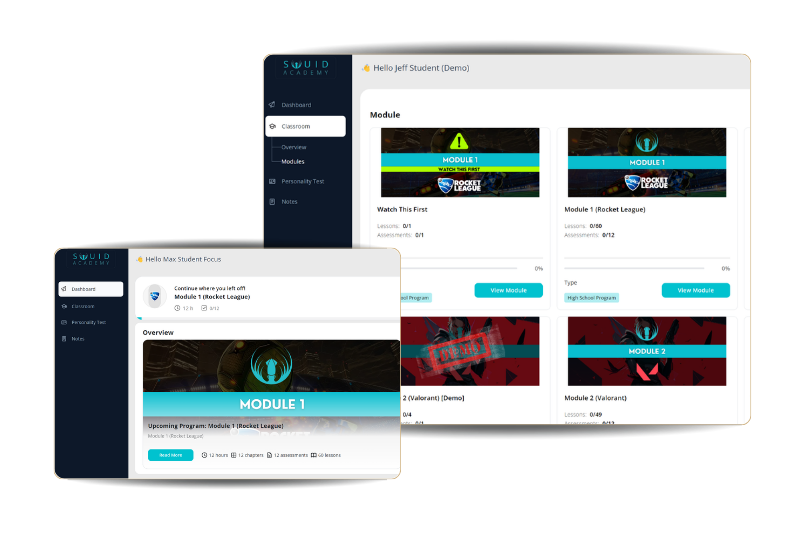
A real curriculum is far more than a video library. Ask any provider to show you all of it:
Lesson plans mapped to a scheme of work
Teacher delivery guides, so a non-specialist can run the room
Class slides and delivery scripts
Student learning guides
Assessments with mark schemes
A defined progression from one term to the next
If a provider can only show you hosted video, they have sold you content. They have not sold you a course. This is the case for esports education as a taught discipline, not an activity with a login.
Step 3: Build around roles, not just players
This is the single decision that separates a five-student club from a whole-school program.
A Valorant roster serves five students. A program built around roles serves an entire cohort:
Casters and commentators
Broadcast producers, observers, and camera operators
Journalists and content writers
Fan engagement and events leads
Team managers and operations staff
Analysts and coaches
Wellness and performance leads
Every one of these is a real job in the industry and a transferable skill outside it. A student who spends a term producing a live broadcast has learned scheduling, run of show, live problem solving, and how to speak clearly under pressure. That evidence goes into a portfolio, a university application, a CV, and increasingly into a collegiate esports scholarship application. Your students are already building a resume. Most schools are still calling it a club.
Roles also solve your participation problem. Not every student wants to compete. Almost every student wants to belong to something. Roles are how you build a program of eighty students instead of a team of five, and they are the most reliable way to close the participation gap that keeps girls out of competitive esports.
Step 4: Choose your game titles last, and choose them to be replaceable
Games are the delivery vehicle. They are not the syllabus.
Pick titles on four criteria, in this order:
Age rating for your year groups
What runs on the hardware you already own
What your students actually play
What has a competitive scene you can enter
Then build so the titles can be swapped without rebuilding the course. Titles rise and fall. The skills of communication, review, strategy, and role discipline do not. If your program collapses when a publisher sunsets a game, then the program was the game. It should never have been.
Step 5: Buy the smallest kit that works
You do not need an arena. You almost certainly do not need to spend anything in term one.
Tier | What you buy | When it makes sense |
Zero build | Nothing. Use existing school machines, student devices, and mobile titles | Term one, always |
Peripherals first | Headsets, mice, mousepads, a capture card, one decent microphone for casting | Once participation is proven |
Dedicated space | Gaming machines, a broadcast desk, a competition room | Once the subject is timetabled and assessed |
Start by auditing what you already own. Check your existing PC specifications against the system requirements of the titles you are considering, and optimise the machines you have before you buy new ones. Most schools discover they can run a full program on hardware already sitting in the building.
Two practical notes. Mobile titles are underrated in school esports, because they run on hardware students already carry and open the door to schools with no gaming lab at all. And your network matters more than your graphics cards. Latency, bandwidth, and firewall rules have ended more school esports sessions than weak hardware ever has. Talk to your IT team before you talk to a supplier.
Step 6: Assess the work, then get it accredited
Unassessed, it is a club. Assessed, it is a subject. Assessed and accredited, it is a line on the timetable that survives a budget review.
Accreditation does four things at once:
Students get recognised evidence of what they learned
Parents get a syllabus, not an assurance
Teachers get a scheme of work, not a lunchtime hobby
Leadership gets something defensible when the finance committee asks what the room is for
It is also the difference between a program a passionate teacher keeps alive and a program the school owns. Programs that depend on one person end when that person leaves. Programs written into the curriculum do not. Enthusiasm gets you started. Governance is what keeps you here.
Squid Academy's high school program holds an "Excellent" endorsement from Education Alliance Finland and is currently in submission with AQA for the Unit Award Scheme. That is what turns esports from an activity into a subject on the syllabus.
Step 7: Staff it with a teacher, not an expert
The most common blocker we hear from schools is "nobody here plays."
That is the wrong qualification anyway. The person running your esports program needs to manage a room, hold a standard, and facilitate a lesson. The subject knowledge should come from the materials, not from the staff member. That is exactly what teacher delivery guides and delivery scripts are for.
If your teacher can run a rehearsal, they can run a scrim review. If they can chair a debate, they can chair a post-match debrief. You do not need to hire an esports expert. You need materials strong enough that you do not have to. This is what a future-ready educator actually looks like: not a specialist, but someone equipped to lead a subject that did not exist when they trained.
Build safeguarding in from day one. Voice comms, Discord servers, streaming, and online competition all need the same duty of care as any school trip. Squid Academy has developed Mind Your Game together with 8 world-class mental/physical health experts for exactly this reason.
Step 8: Build wellbeing into the training, not around it
In every serious sport, performance and wellbeing are the same lesson. Esports is no different.
Sleep, hydration, posture, warm ups, breaks, and how to reset after a loss are all performance topics. Teach them as performance topics, alongside the habits that actually raise player performance. A student who learns to manage tilt, review a loss without spiralling, and step away from the desk on schedule has learned something that will outlive every title on your roster.
The staff need it too. The mental game is not just for the players.
Step 9: Compete in the right order
In-house first. Always.
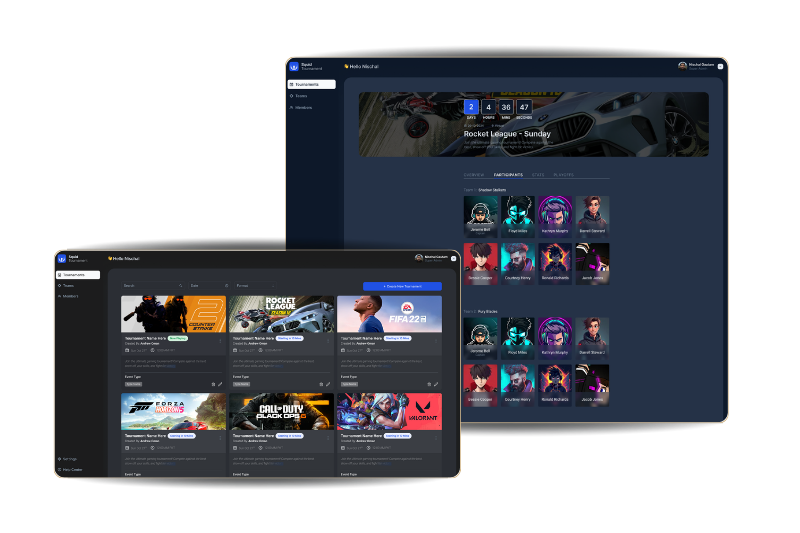
In-house ladder or scrim night: Low stakes, high frequency, everyone plays. Custom tournaments are straightforward to run once someone shows you how.
Friendlies with two or three nearby schools: Real opposition, no travel budget.
Regional and national leagues: Selected squad only, once there is depth behind them. Prepare students properly before their first competitive tournament.
A student-run league: Students handle scheduling, casting, broadcast, rules, results, and the integrity standards that govern all of it.
That last one is the goal, and it is also your best assessment. When students are running the competition rather than only competing in it, you have a program.
Step 10: Measure what survives a budget review
Win rate is the least interesting number your program produces. Track these instead:
Participation, split by role, not just by roster
Retention across terms
Attendance on program days, compared with the rest of the week
How many participants are not engaged in any other co-curricular activity
Assessment and portfolio completion Progression into subject choices, further study, and work experience
The attendance line is worth taking seriously. A 2025 study by Garden State Esports and Monmouth University tracked 229 students across three New Jersey high schools and found esports participation was associated with fewer absences and meaningful gains in instructional time.
Bring that kind of evidence to your leadership team. Not a viewership chart.
Your first term, in twelve weeks
Weeks 1 to 2: Audit what you already have. Machines, network, room, staff, and the students who are already playing. Name a teacher lead.
Weeks 3 to 4: Write the proposal. Four sections: what students will learn, how it is assessed, who delivers it, what it costs. Keep it to two pages.
Weeks 5 to 6: Open recruitment. Advertise every role, not just player. Run one interest session and let students self-select into caster, producer, manager, analyst, or competitor.
Weeks 7 to 9: Teach. Run the first unit properly, with lesson plans and assessment. Hold one scrim night a week.
Weeks 10 to 12: Showcase. Students cast and broadcast an in-house final to the school. Capture the evidence. Report the metrics. Plan term two.
You do not need an arena to do any of this.
The five ways school esports programs fail
Kit before curriculum: Money spent before outcomes were defined.
Players only: Five students served, everyone else excluded.
No assessment: Nothing for students to show, nothing for leadership to defend.
One champion: The program lives and dies with a single teacher.
Built on a title: The game changes and there is nothing left underneath.
Fix the order and none of these are your problem.
Frequently asked questions
How much does it cost to start a school esports program?
It can cost nothing in term one. The most common mistake is spending on hardware before the curriculum exists. Start with the machines already in the building, run the first unit, prove participation, then spend on peripherals. Dedicated gaming machines and a broadcast desk should be the last purchase, not the first.
Do you need gaming PCs to start an esports program?
No. Many competitive titles run on standard school machines or on mobile devices students already own. Schools with no gaming hardware at all can run a full program built around roles such as casting, broadcast, journalism, analysis, and operations, none of which require a gaming PC.
Who should run a school esports program?
A teacher, not an esports expert. The role requires classroom management and facilitation, not competitive gaming experience. The subject knowledge belongs in the teacher delivery guides, scripts, and lesson plans. If the program depends on the staff member being a gamer, it ends when that staff member leaves.
What games should a school esports program use?
Choose on age rating first, then on what runs on your existing hardware, then on what students actually play, then on what has a competitive scene you can enter. Build the course so the title can be swapped without rebuilding the syllabus. Common school titles include Rocket League, Valorant, League of Legends, and Counter-Strike 2, alongside mobile titles for schools with limited hardware.
Can esports be an accredited subject?
Yes. Pearson and the British Esports Federation created the first esports qualification, and structured curricula can be independently accredited. Squid Academy's MSPC framework holds an "Excellent" endorsement from Education Alliance Finland and is in submission with AQA for the Unit Award Scheme. Accreditation is what moves esports from a lunchtime club to a defensible line on the timetable.
What roles are there in a school esports program besides player?
Caster, broadcast producer, observer, camera operator, journalist, content writer, social media manager, community manager, fan engagement lead, events lead, team manager, operations staff, analyst, coach, and wellness lead. Each maps to a real job in the industry and produces portfolio evidence.
Is there an honest case against esports in schools?
Yes, and it is worth reading before you commit. We have written the honest case against esports education ourselves. The short version: esports without curriculum, assessment, or safeguarding is screen time with a scoreboard. The argument for esports in schools is an argument for structure, not for gaming.
What should I tell parents?
Give them the syllabus, not an assurance. Parents want to know what their child is learning, how it is assessed, and where it leads. Our parent-facing guides cover esports for kids, Valorant, and Discord.
What Squid Academy builds
Squid Academy runs MSPC, the Modern Sport Pathways and Competition framework: a structured esports curriculum for upper primary through senior secondary.
It covers Game Modules in Rocket League, Valorant, League of Legends, and Counter-Strike 2, and Role Stacks in casting, broadcast, journalism, social media, community management, fan engagement, team management, and team operations, alongside coaching and wellness. Every chapter ships with a teacher delivery guide, a student learning guide, class slides, a delivery script, a lesson plan, and assessments. It runs across three tiers, from Essential to Elite, so a school can start light and scale.
MSPC holds an "Excellent" endorsement from Education Alliance Finland and is in submission with AQA for the Unit Award Scheme. It runs today in schools across Thailand, Malaysia, and the United States.
Building an esports program at your school?