
Esports Training Program
Play The Game
A licensed, progression-based esports training framework for arenas, gaming hubs, and structured youth environments.
About the Program
Play The Game is Squid Academy's official esports training and competitive development framework, designed and licensed for structured delivery in esports arenas, gaming hubs, and organised youth environments.
As the intellectual property owner and global licensor of the program, Squid Academy provides a fully developed training system — not informal coaching templates or open-play sessions.
The framework was built to solve a structural gap in the esports venue market: Most gaming centers provide access. Few provide progression.
This is esports delivered with the same progression logic found in traditional sport academies — but adapted for the realities of modern competitive gaming.
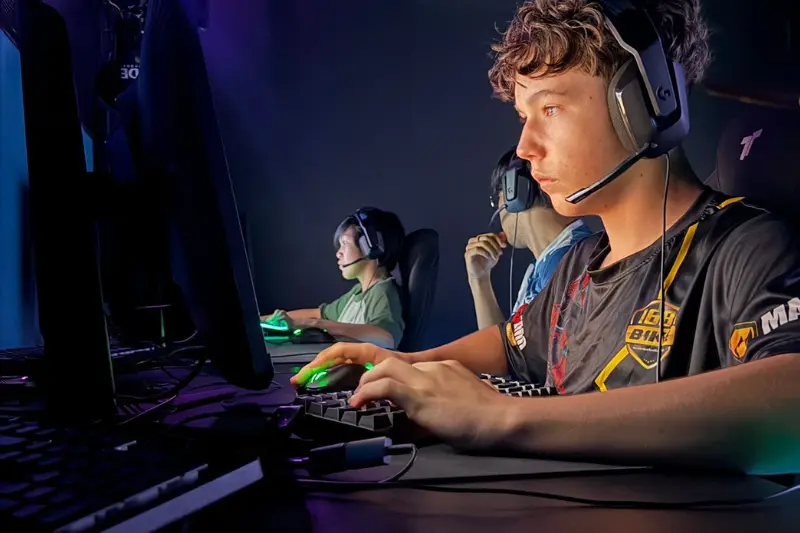
What Play The Game Delivers
Play The Game transforms casual gameplay into a measurable development pathway through:
Why This Matters
The global growth of esports participation has not been matched by structured training environments. Players often improve through repetition alone, without:
Play The Game introduces:
For venues
A credible, sellable training product.
For parents
Clarity and supervision.
For players
Structure and direction.
Curriculum
Play The Game is built as a structured competitive development framework — not a collection of drills or ad-hoc coaching sessions. The curriculum architecture has been designed by Squid Academy as a repeatable, licensable training system that standardises how esports improvement is delivered across venues.
Intro Class
Structured Onboarding
The Intro Class is a controlled entry point into competitive training. It is a baseline calibration session that ensures every participant begins with shared language, shared standards, and defined expectations.
It establishes:
- Core game fundamentals
- Role clarity and responsibility mapping
- Communication expectations
- Behavioural standards
- Performance mindset foundations
Without structured onboarding, long-term progression is unstable.
Adaptive Classes
Progressive Weekly Development
Adaptive Classes form the ongoing engine of improvement. Unlike static lesson plans, they evolve based on player development data and coaching observation.
Each session is dynamically structured around:
- Observed performance gaps
- Tactical development priorities
- Role-specific skill refinement
- Communication efficiency
- Review and measurable feedback
The Adaptive model is what differentiates structured training from repetitive scrimming.
Core Performance Pillars
Across all titles, the curriculum is organised around six integrated performance pillars:
Game Strategy
Understanding mechanics, map control, tempo, macro decisions, and role interaction.
Team Dynamics
Communication structure, trust building, conflict management, and coordination systems.
Leadership & Coaching
Feedback delivery, in-game leadership habits, peer accountability, and decision ownership.
Performance Mastery
Drill design, repetition quality, review systems, and consistency development.
Mindset & Wellness
Focus regulation, emotional control, pressure management, warm-up and recovery protocols.
Professional Awareness
Responsible conduct, digital identity, esports career literacy, and long-term pathway awareness.
This pillar structure ensures development extends beyond technical gameplay and into transferable performance competencies.
Progression & Measurement
Participants move through structured development cycles. Improvement is documented and observable, not assumed.
Venues licensed to deliver the program gain access to Squid Academy's standardised templates and tracking tools to ensure consistency in delivery quality.
Supported Titles
The Play The Game Series expands across globally recognised competitive titles. Each title follows the same curriculum logic, ensuring scalability across venues and regions.
 Valorant
 Fortnite
 CS2
CS2 League of Legends
 Arena of Valor
 Rocket League
Title availability may vary by partner configuration and infrastructure readiness.
High-level program overview. Full implementation shared through consultation.
Delivery
Play The Game is delivered through a controlled, standardised implementation model designed by Squid Academy for licensed venues. The program is not distributed as loose content — it is deployed as an operational training framework.
Hybrid Learning Infrastructure
Each session operates within Squid Academy's hybrid training architecture, combining:
- Expert-led digital instruction
- Coach-facilitated applied training
- Structured drills and tactical exercises
- Guided live scrimmages
- Performance review and reflection systems
The digital layer standardises instructional quality. The in-person layer localises execution.
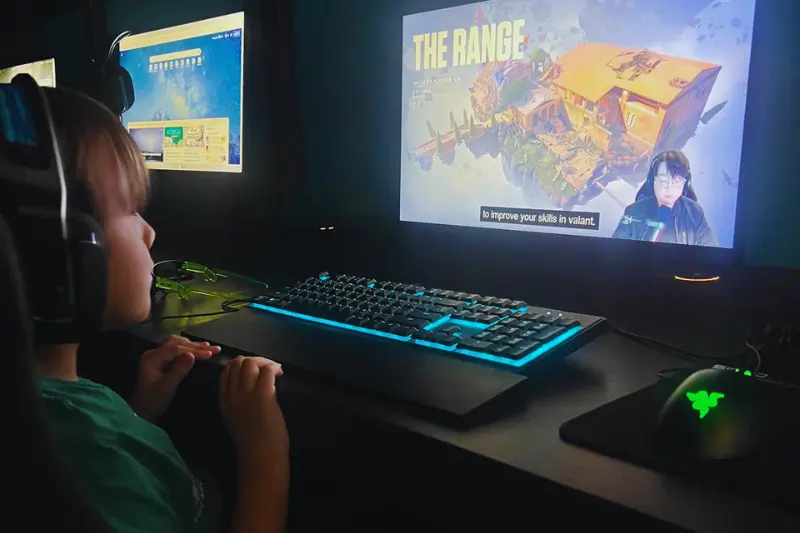
Platform-Supported Delivery
All licensed venues operate within Squid Academy's integrated ecosystem. Venues receive access to:
Play The Game is not dependent on individual coach interpretation. It is supported by a structured system.
Coach Enablement & Standardisation
Squid Academy provides onboarding and enablement protocols to ensure delivery standards are maintained:
Coaches remain the face of the program locally. Squid Academy provides the structural backbone that ensures delivery quality remains consistent.
Implementation Flexibility
The framework is adaptable to different operational environments:
Venue Types
- Esports arenas
- LAN centers
- After-school competitive hubs
- Regional esports academies
Configurable Elements
- Weekly class cadence
- Title offerings
- Cohort segmentation
- Multi-tier progression tracks
Core curriculum architecture and delivery standards remain standardised under Squid Academy licensing.
Outcomes
Play The Game is designed to produce observable, measurable development — not just increased playtime. This is competitive development with accountability.
Player Outcomes
Technical Development
- Improved mechanical consistency
- Clearer role execution
- Better tactical awareness
- Stronger decision-making under pressure
Team & Communication
- Structured in-game communication habits
- Defined role responsibility
- Conflict resolution and feedback literacy
- Accountability within competitive environments
Performance & Mindset
- Structured warm-up and cooldown routines
- Emotional regulation during competition
- Focus and recovery awareness
- Goal-setting and progress reflection systems
Improvement becomes documented, not anecdotal.
Venue & Partner Outcomes
For licensed venues, Play The Game provides structural and commercial advantages:
- A progression-based training product
- Clear differentiation from open-play models
- Recurring membership pathways
- Higher retention through tiered development
- Standardised class architecture
- Multi-title scalability
- Institutional credibility through accredited methodology
Venues shift from selling time to delivering development.
Parent Confidence
For parents, structured delivery creates clarity:
- Defined training environment
- Responsible supervision
- Measurable progression
- Skill-based development
- Healthy performance habits
Play The Game reframes gaming as guided development rather than passive consumption.
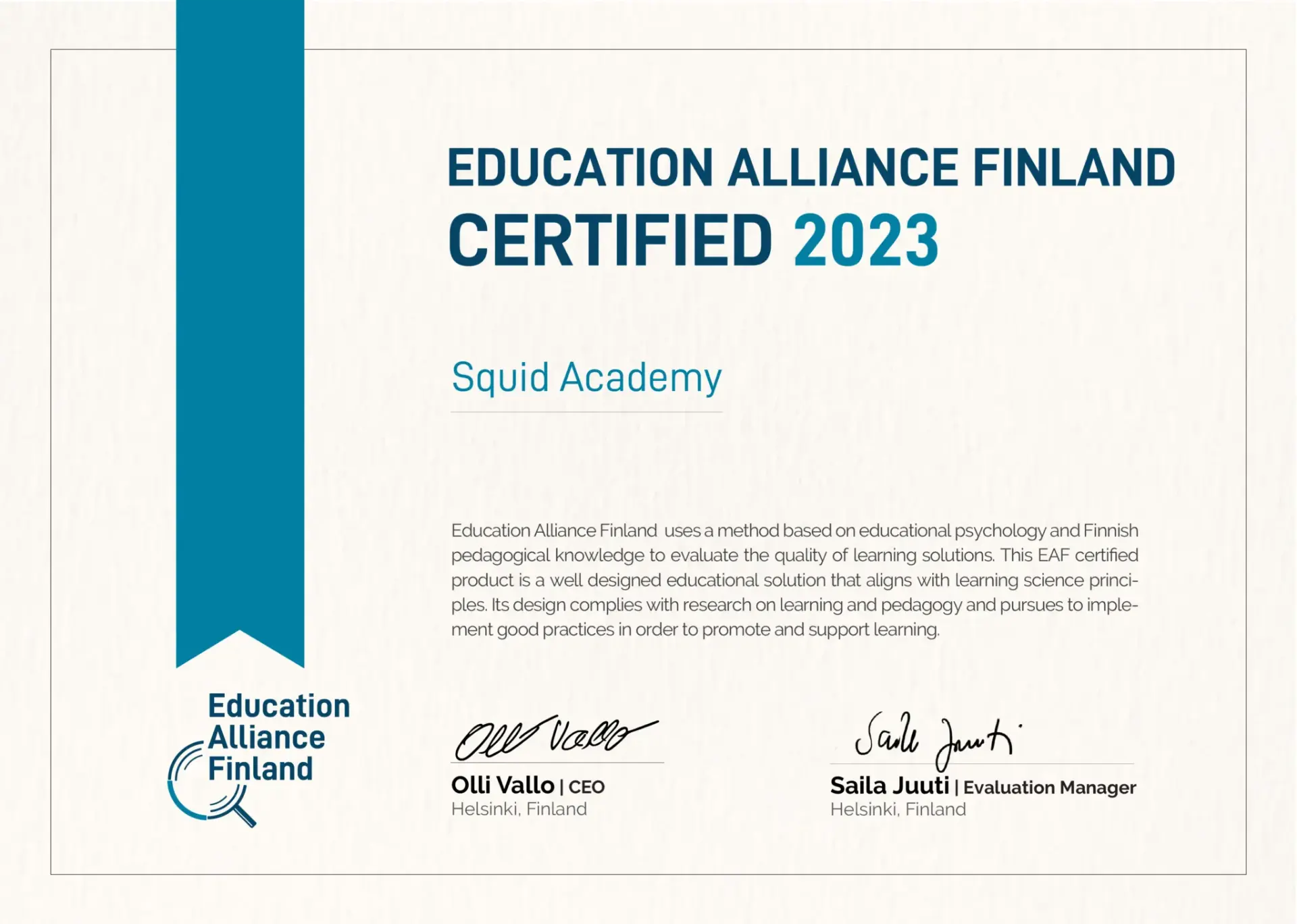
Internationally Accredited
Our curriculum has been certified by Education Alliance Finland — a globally respected authority in learning quality — with an Excellent rating for pedagogical quality. This accreditation reinforces that Play The Game is built on structured instructional design — not informal coaching models.
92%
Pedagogical Quality Score
4.2 / 5
Learning Engagement Rating
Research-Based
Educational Psychology Standards
PTG
CEFR Aligned
Language & Accessibility Standards
PTG, Play The Game
All program materials are written to defined English language standards, calibrated by audience and program level, so that learning stays accessible while delivery remains confident and consistent.
CEFR A1-A2
Player-Facing
eCourse materials, Student Learning Guides, in-class resources
CEFR B1
Coach-Facing
Coach Navigation Index, session structures, delivery notes
These standards apply across all Game Modules and program themes within the Play The Game framework, covering Valorant, League of Legends, and Counter-Strike 2.
Long-Term Impact
The objective of Play The Game is not short-term ranking improvement. It is the cultivation of disciplined, accountable competitors who understand:
That is the difference between casual play and structured esports development.
Access & Next Steps
Venues can access Play The Game through:
Through authorised Squid Academy partners
In your region
Directly from Squid Academy
Where no local partner exists
Commercial models and delivery structures may vary by region. All implementations provide access to Squid Academy's full training ecosystem.



Bring structured, progression-based esports training to your venue.
Get in touch to discuss licensing and implementation.
Discuss Play The Game for Your Center